Tuesday, September 8, 2009

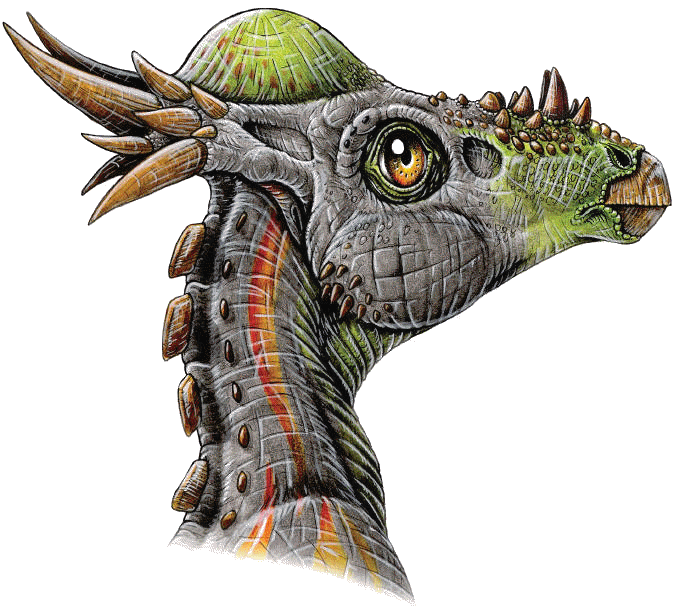
Stygimoloch


Stygimoloch
is an interesting dinosaur for a number of reasons. Although it lived in the late Cretaceous, it had a number of primitive characteristics. It had five fingers, it had teeth similar to Stegosaurus in the back of its mouth, but the front was filled with sharp incisors similar to a carnivore. All of the remains that had been previously found were misidentified as those from a Pachycephalosaurus. In fact, even Triebold's specimen was initially misidentified as Pachycephalosaurus.

Description and picture by :
http://www.dinosaur-world.com/weird_dinosaurs/stygimoloch_spinifer.htm

Friday, September 4, 2009

The Woolly Mammoth

Description and picture by :

http://en.wikipedia.org/wiki/Woolly_mammoth

The woolly mammoth (Mammuthus primigenius), also called the tundra mammoth, is an extinct species of mammoth. This animal is known from bones and frozen carcasses from northern North America and northern Eurasia with the best preserved carcasses in Siberia.

This mammoth species was first recorded in (possibly 150,000 years old) deposits of the second last glaciation in Eurasia. They were derived from steppe mammoths (Mammuthus trogontherii).

It disappeared from most of its range at the end of the Pleistocene (10,000 years ago), with a dwarfed race still living on Wrangel Island until roughly 1700 BCE.

Sunday, August 23, 2009

Maiasaura


http://www.cartage.org.lb/en/themes/sciences/Paleontology/Paleozoology/Mesozoic/1maia6.jpg


Maiasaura Description
:
(http://en.wikipedia.org/wiki/Maiasaura)

Maiasaura was large, attaining an adult length of about 9 meters (30 feet) and had the typical hadrosaurid flat beak and a thick nose. It had a small, spiky crest in front of its eyes. The crest may have been used in headbutting contests between males during the breeding season.

This dinosaur was herbivorous. It walked both on two (bipedal) or four (quadrupedal) legs and appeared to have no defense against predators, except, perhaps, its heavy muscular tail and its herd behaviour. These herds were extremely large and could have comprised as many as 10,000 individuals.


Wednesday, May 6, 2009

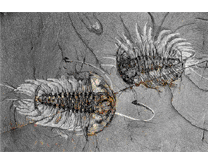
Burgess Shale Picture


Fosil Burgess Shale,
by :
http://www.fossils-facts-and-finds.com/trilobites.html

Friday, May 1, 2009

Dinosaurs Size

Dinosaur size

From Wikipedia, the free encyclopedia

Size has been one of the most interesting aspects of dinosaur science to the general public. This article lists the largest and smallest dinosaurs from various groups, sorted in order of weight and length.


Scale diagram comparing the largest known dinosaurs in four suborders and a human.